
- Home
- >
- News
- >
- Focare’s Insights on Industry News
- >
- Food Container Injection Mold Guide | Focare Mould
Food Container Injection Mold Guide | Focare Mould
Food Container Injection Mold Buyer Guide
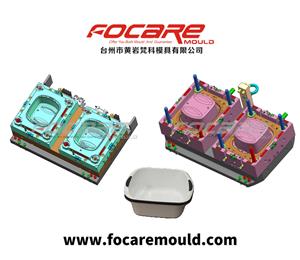
A food container injection mold is specified around the container body, lid, material and production target. Focare Mould’s published kitchenware projects include conventional plastic container molds and two-color lid molds. Buyers should identify the exact part and resin before comparing quotations: the body and lid can use different cavity layouts, runner systems and mold structures.
Define the body and lid separately
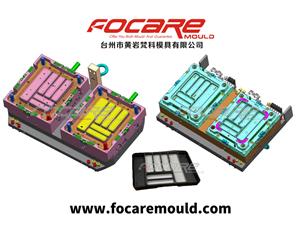
A plastic food storage container may involve a rigid body, a lid and an area that seals or grips. Start with the dimensions and drawings for each part. State the desired volume, wall thickness, stacking features, closure geometry and appearance. A single-color body mold is a different tooling question from a PP+TPE two-color lid mold. The finished design and material grades determine whether a two-shot process is suitable.
A published PP body and PP+TPE lid example
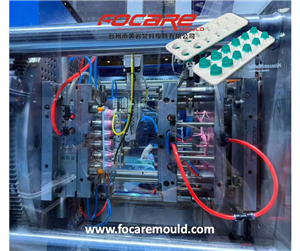
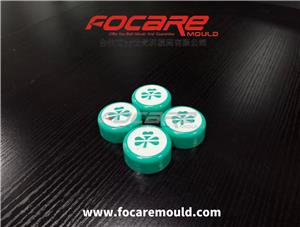
Focare’s two-color plastic food containers mold project lists a PP+TPE lid configuration with 2+2 cavities and a 718H mold steel specification. The same project lists PP body molds for small, medium and large versions. The small and medium body examples each use two cavities, while the large body example uses one cavity. These are project specifications, not standard settings for every container. Buyers should confirm final cavity count, material pairing, runner and gate layout against their own part model and machine.
Consider the seal and the production machine
An airtight food container mold needs an accurately defined closure and seal geometry. Describe whether the lid uses a separate gasket, a second molded material or another closure arrangement. The material grades, shrinkage behavior and dimensions should be reviewed together. For a two-color lid, provide both resin grades and the intended injection machine model so the tooling team can discuss machine compatibility and mold movement. A conventional single-material lid may be appropriate for a different product design.
Review the wider kitchenware range
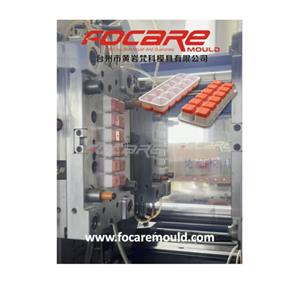
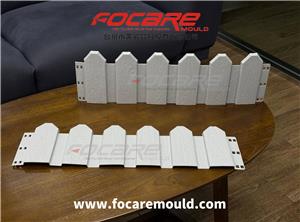
The two-color food container mold category includes food storage container and lid examples. Focare’s broader kitchenware injection mold range also covers bowls, trays and utensils. Compare the relevant project pages to see the actual resin, cavity and machine details. Product family terms such as plastic container mold, food container lid mold and kitchenware injection mold describe different buyer needs; a dedicated product page is more useful than treating all of them as one interchangeable mold.
Prepare a useful RFQ
Send Focare Mould a 3D file or 2D drawing for the body and lid, both material grades, the target annual output, desired cavity count, closure and surface requirements, injection machine model and any sample available. For products intended for food contact, specify the applicable material and finished-product compliance requirements for your market. The tooling review can then address feasibility, molding trials and quotation scope. Contact Focare Mould with the drawings and project requirements.
