
Why Do Plastic Parts Stick to the Mold Core? Causes and Solutions
Why Do Plastic Parts Stick to the Mold Core? Causes and Solutions
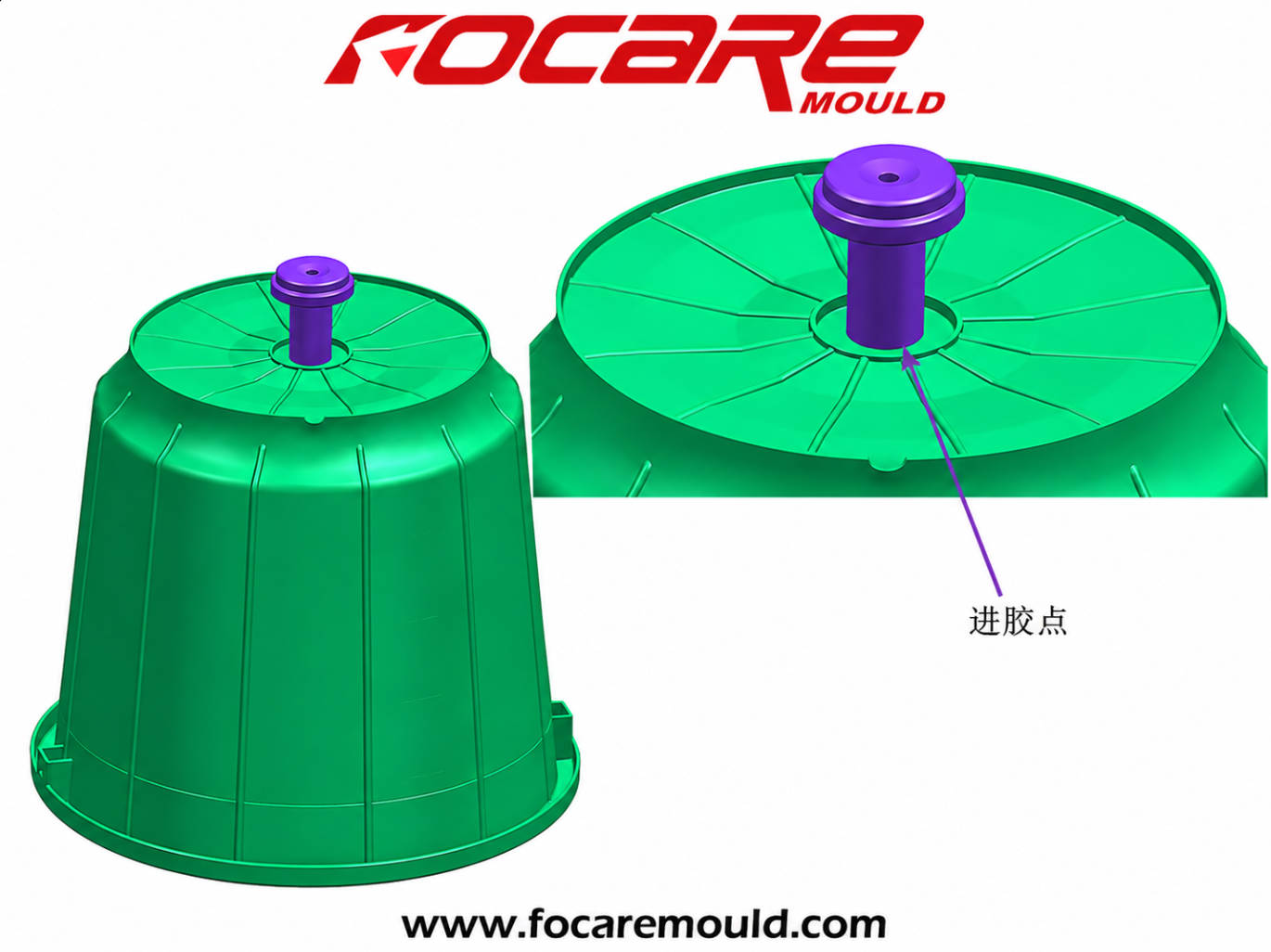
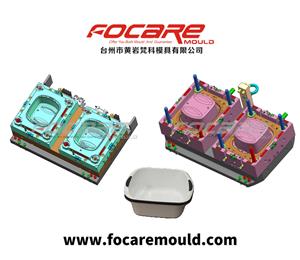
Plastic parts sticking to the mold core is a common problem in injection molding, especially when manufacturing deep plastic containers, storage boxes, buckets, and other large plastic products.
When a molded part cannot be released smoothly, it may cause product deformation, ejector marks, longer cycle times, or even mold damage.
Understanding the causes of plastic parts sticking to the mold is essential for improving production efficiency and maintaining consistent product quality.
In this article, Focare Mould explains the common causes of mold sticking and how proper mold design can help prevent demolding problems.
1. Why Do Plastic Parts Stick to the Mold Core?
During injection molding, molten plastic fills the mold cavity and begins to shrink as it cools.
For products with deep cavities, the plastic may shrink tightly around the mold core, increasing the force required for ejection.
This is particularly common in products such as:
① Plastic storage boxes
② Industrial containers
③ Plastic buckets
④ Waste bins
⑤ Deep household organizers
The deeper the product, the more important it becomes to evaluate draft angles, shrinkage behavior, cooling efficiency, and the ejection system.
If these factors are not properly considered, injection mold demolding problems may occur during production.
2. Five Common Causes of Plastic Parts Sticking to Mold
❶ Insufficient Draft Angle
Draft angle allows the molded product to separate from the mold core during ejection.
When the draft angle is too small, friction between the plastic part and the mold surface increases.
For deep plastic products, even a small difference in draft angle can significantly affect the required ejection force.
✓ Engineering Solution:
Evaluate the product geometry and provide sufficient draft angles according to the plastic material, surface texture, and product depth.
❷ Plastic Shrinkage Around the Core
Plastic materials shrink as they cool.
For deep containers, shrinkage may cause the product to grip the mold core tightly.
Materials such as PP and HDPE have relatively high molding shrinkage compared with many amorphous plastics.
✓ Engineering Solution:
Consider material shrinkage during DFM analysis and optimize cooling, product geometry, and ejection design to reduce excessive gripping force.
❸ Poor Mold Surface Finish
The surface condition of the mold core directly affects demolding performance.
Machining marks, scratches, or unsuitable surface textures may increase friction and make product release more difficult.
✓ Engineering Solution:
Select an appropriate mold surface finish based on the product material and appearance requirements.
Polishing may improve release in certain applications, while textured surfaces require sufficient draft angles.
❹ Vacuum Effect During Ejection
Large plastic products with deep cavities may experience a vacuum effect during demolding.
When air cannot enter between the product and the mold core, negative pressure can resist product release.
This may increase the required ejection force and cause deformation.
✓ Engineering Solution:
Consider suitable air-release paths or air-assisted ejection where necessary.
Proper air-release features and mold structure can help reduce vacuum-related demolding problems.
❺ Improper Ejection System Design
An unsuitable ejection system is another common cause of injection mold ejection problems.
If ejection force is concentrated in only a few areas, the molded product may deform or develop visible ejector marks.
✓ Engineering Solution:
Distribute ejection force appropriately and select a suitable ejection mechanism according to the product geometry.
For deep plastic containers, a stripper plate or stripper ring may provide more balanced ejection than conventional ejector pins alone.
3. How to Prevent Plastic Parts from Sticking
Preventing mold sticking requires a combination of product design, mold construction, and molding process control.
Several important considerations include:
✓ Optimize Draft Angles
Provide sufficient draft to reduce friction during demolding.
✓ Improve Cooling Uniformity
Uneven cooling may cause differential shrinkage and product deformation.
A well-designed cooling system helps maintain consistent mold temperatures.
✓ Select Appropriate Mold Surface Finishes
Core surface conditions should be evaluated according to the material and product requirements.
✓ Improve Air Release
For deep products, air-assisted ejection or suitable air-release features may help prevent vacuum-related sticking.
✓ Optimize Ejection Force Distribution
Balanced ejection helps reduce localized stress and product damage.
In addition, molding parameters such as packing pressure, holding time, mold temperature, and cooling time should be evaluated during mold trials.
4. Stripper Plate vs Ejector Pins: Which Is Better?
Selecting the correct ejection system is especially important for deep plastic products.
| Feature | Ejector Pins | Stripper Plate / Ring |
|---|---|---|
| Ejection Method | Localized contact points | Distributed contact area |
| Mold Complexity | Generally simpler | Usually more complex |
| Suitable Products | Small and medium components | Selected deep containers |
| Ejection Force | Concentrated at pin locations | More evenly distributed |
| Product Deformation | Depends on pin arrangement | Can reduce localized deformation |
| Maintenance | Individual pins can be replaced | Requires precise fitting and guidance |
For large storage boxes and deep plastic containers, stripper plate systems may provide more uniform ejection force.
However, the final selection depends on product geometry, available contact surfaces, mold structure, and injection machine requirements.
5. Mold Design Considerations for Deep Plastic Containers
Deep plastic products require particular attention during mold development.
At Focare Mould, engineering evaluations for storage boxes, buckets, and other deep plastic products consider several important factors:
① Product depth and draft angle
② Material shrinkage characteristics
③ Core and cavity cooling arrangements
④ Ejection force distribution
⑤ Mold surface finish
⑥ Venting and air-release requirements
⑦ Injection machine compatibility
These factors should be evaluated together rather than individually.
For example, increasing the ejection force alone may not solve a sticking problem if the primary cause is insufficient draft or excessive shrinkage around the core.
A proper DFM evaluation helps identify potential demolding risks before mold manufacturing begins.
6. Custom Plastic Injection Mold Solutions from Focare Mould
Focare Mould is a custom plastic injection mold manufacturer in China, specializing in molds for household products, storage containers, industrial crates, plastic buckets, and other injection molded components.
Our engineering team supports customers throughout the mold development process, including:
✓ Product and DFM evaluation
✓ Mold structure design
✓ Cooling and ejection system development
✓ Precision mold manufacturing
✓ Mold assembly and T1 trials
✓ Mold modifications and sample approval
Our goal is to develop injection molds that support reliable product release, consistent quality, and stable mass production.
Looking for a Reliable Plastic Injection Mold Manufacturer?
If you are developing a plastic storage box, bucket, industrial container, or other injection molded product, Focare Mould can help evaluate your tooling requirements.
Send us your product drawings, selected plastic material, expected production quantity, and injection machine specifications.
Our engineering team can review your project and recommend a suitable mold solution.
Contact Focare Mould to discuss your next injection mold project.
