
Injection Mold Design Approval Checklist Before Machining
Before mold steel is machined, the buyer and mold maker should confirm that the proposed design matches the final product, the intended injection molding machine and the agreed production requirements. A structured injection mold design approval checklist helps identify conflicts while changes are still manageable.
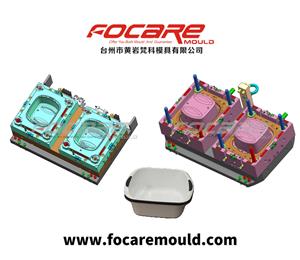
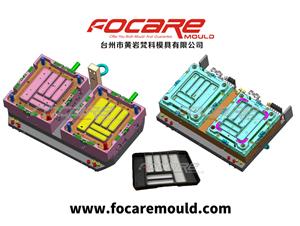
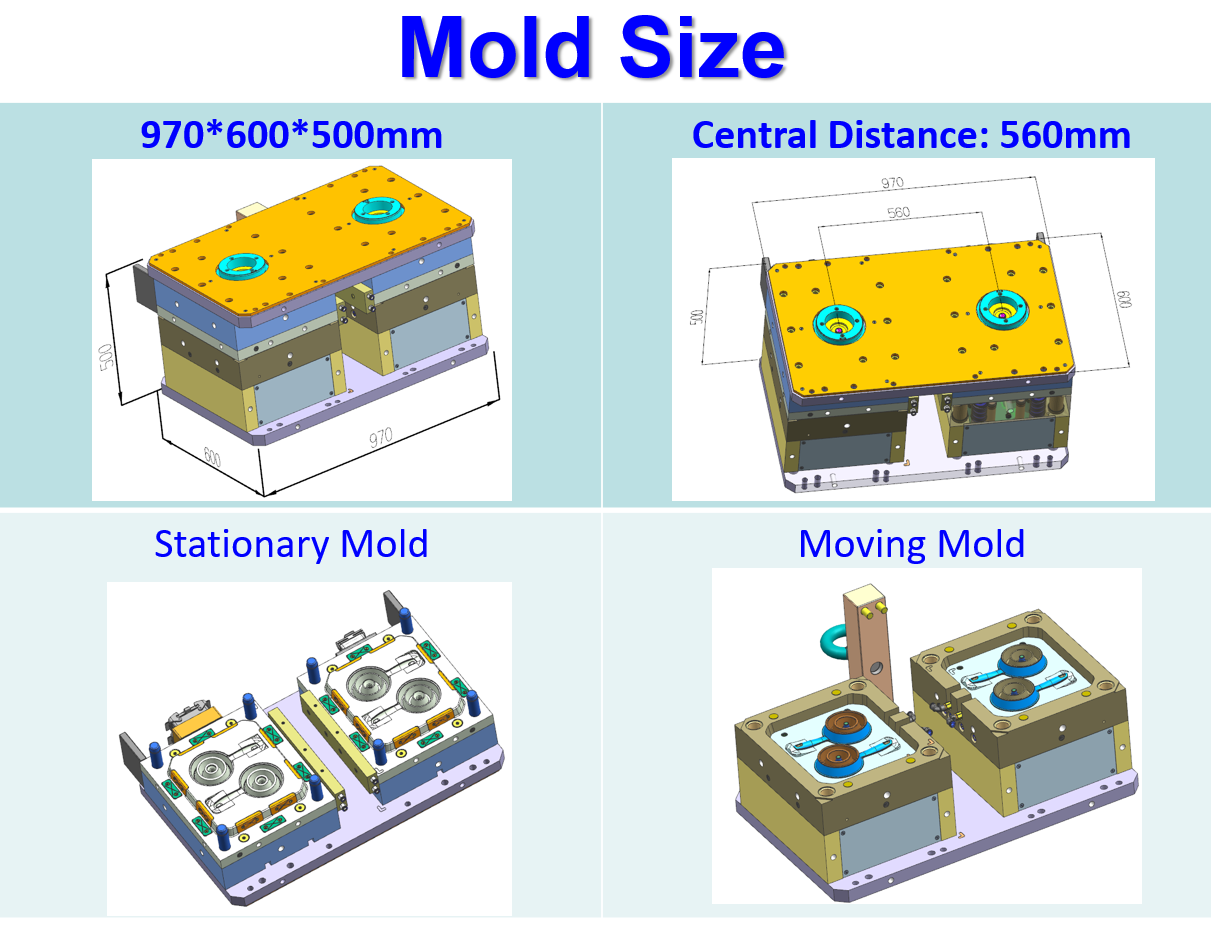
This engineering example shows the type of information Focare Mould reviews with customers before machining. The drawings include the overall mold arrangement, ejection layout and cooling circuits. The illustrated mold size is 970 × 600 × 500 mm, with a shown center distance of 560 mm.
1. Confirm the Product Design Baseline
The final 3D product file, critical dimensions, plastic material, shrinkage assumption, wall thickness, draft angles, surface requirements and assembly interfaces should be confirmed first. Even a small change to a rib, opening or undercut can affect inserts, parting surfaces, ejection and cooling. The approved product revision should therefore be recorded before mold manufacturing begins.
2. Review Parting Line, Gate and Runner
Buyers should review whether the parting line is acceptable for product appearance and function. Gate position, gate type, runner system and visible gate marks should also be agreed. For complex products, mold-flow analysis can support the review, but simulation results still need to be evaluated together with practical mold construction and processing experience.
3. Check the Ejection System
The ejection design must release the molded part without unacceptable marks or deformation. Review ejector positions, ejection stroke, part support and compatibility with the injection machine. Deep containers and products with complex geometry may require sleeves, stripper components or other project-specific mechanisms.
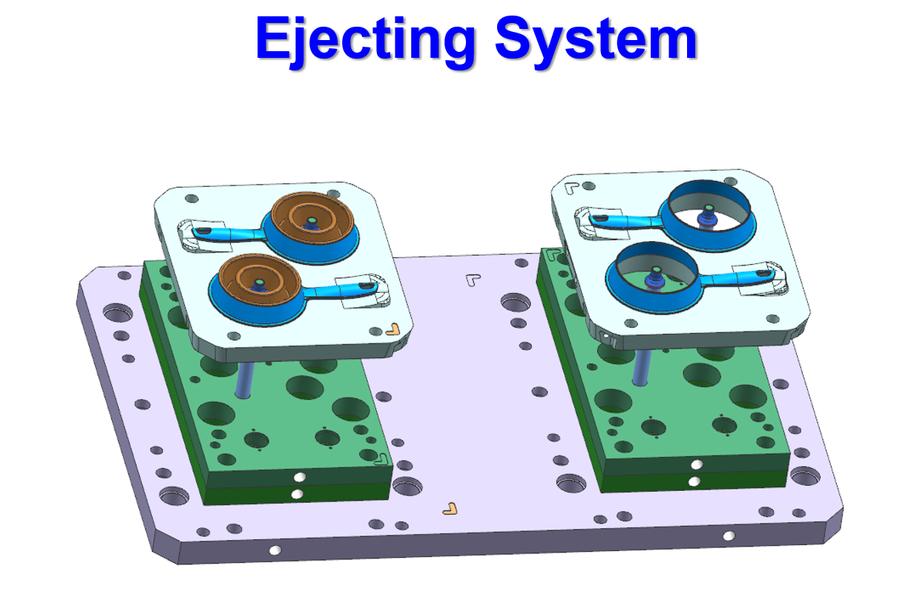
Ejection layout reviewed before machining to confirm release direction, stroke and part support.
4. Verify Cooling Layout and Connections
Cooling design affects mold-temperature control, dimensional stability and production consistency. The design review should cover circuit layout, inlet and outlet locations, connector standards and maintenance access. On a multi-block mold, the stationary and moving sides may use separate circuits that must be clearly identified in the approved drawings.
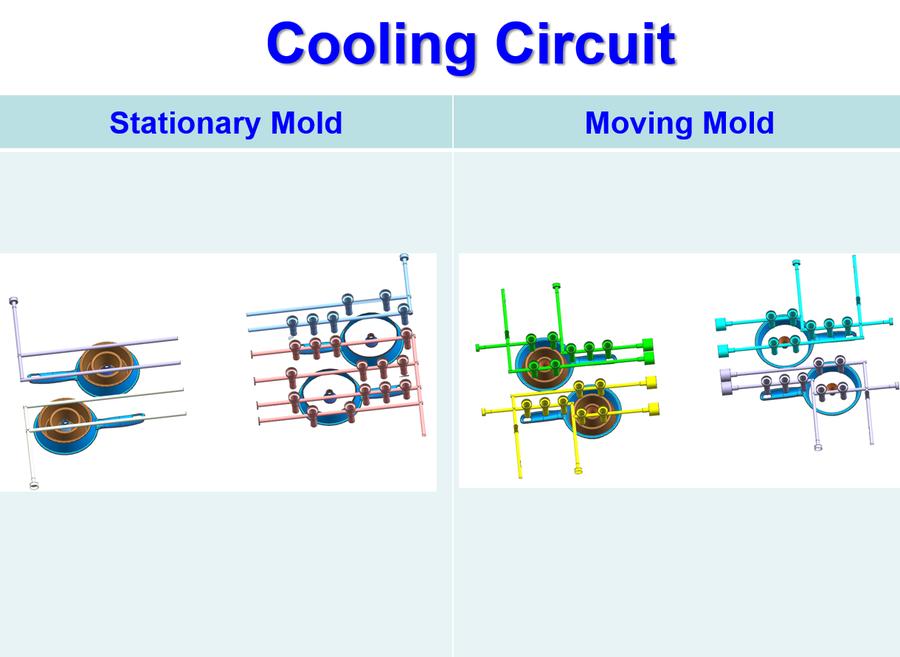
Cooling circuit layout for the stationary and moving mold sections.
5. Confirm Machine Compatibility
• Tie-bar spacing and platen dimensions must allow installation.
• Mold thickness and opening stroke must remain within machine limits.
• Ejection stroke and interface must match the machine.
• Injection capacity and nozzle interface must suit the proposed runner system.
• Clamping capacity must be checked against the projected molding requirement.
External mold dimensions alone are not sufficient. The intended machine specification should be reviewed as a complete set.
6. Agree on Components and Construction Standards
If the buyer requires specific mold-base standards, hot-runner brands, hydraulic components, electrical connectors, water fittings or locating parts, these requirements should be written into the approval record. Where a named component requires approval, an alternative should not be substituted without agreement.
Final Approval Checklist
☐ Final product revision and critical dimensions confirmed
☐ Material and shrinkage assumptions reviewed
☐ Parting line, gate and runner arrangement approved
☐ Ejection method and visible ejector marks reviewed
☐ Cooling circuits and factory connections confirmed
☐ Injection machine compatibility verified
☐ Required component brands and standards recorded
☐ Final 2D/3D mold drawings and open comments formally approved
Why the Approval Stage Matters
A clear mold design review reduces misunderstandings and helps both parties identify changes before machining. It does not replace mold trials or production validation, but it establishes an agreed technical baseline for the project.
Focare Mould supports customers with injection mold design review, mold manufacturing and project communication for household products, storage products, industrial components and two-color applications. Send us your product drawings, material requirements and machine specifications to begin a technical review.
